
A new Econovation Insight Paper explores how the circular economy can build industrial capability, support innovation and strengthen cities and regions. Drawing on examples from Australia and overseas, it argues that circular economy should become a mainstream economic development issue.
A circular economy creates opportunities to build new industries, strengthen existing ones and develop new sources of competitive advantage. By connecting resource recovery with manufacturing, research, investment and innovation, cities and regions can turn existing resource flows into productive economic capability.
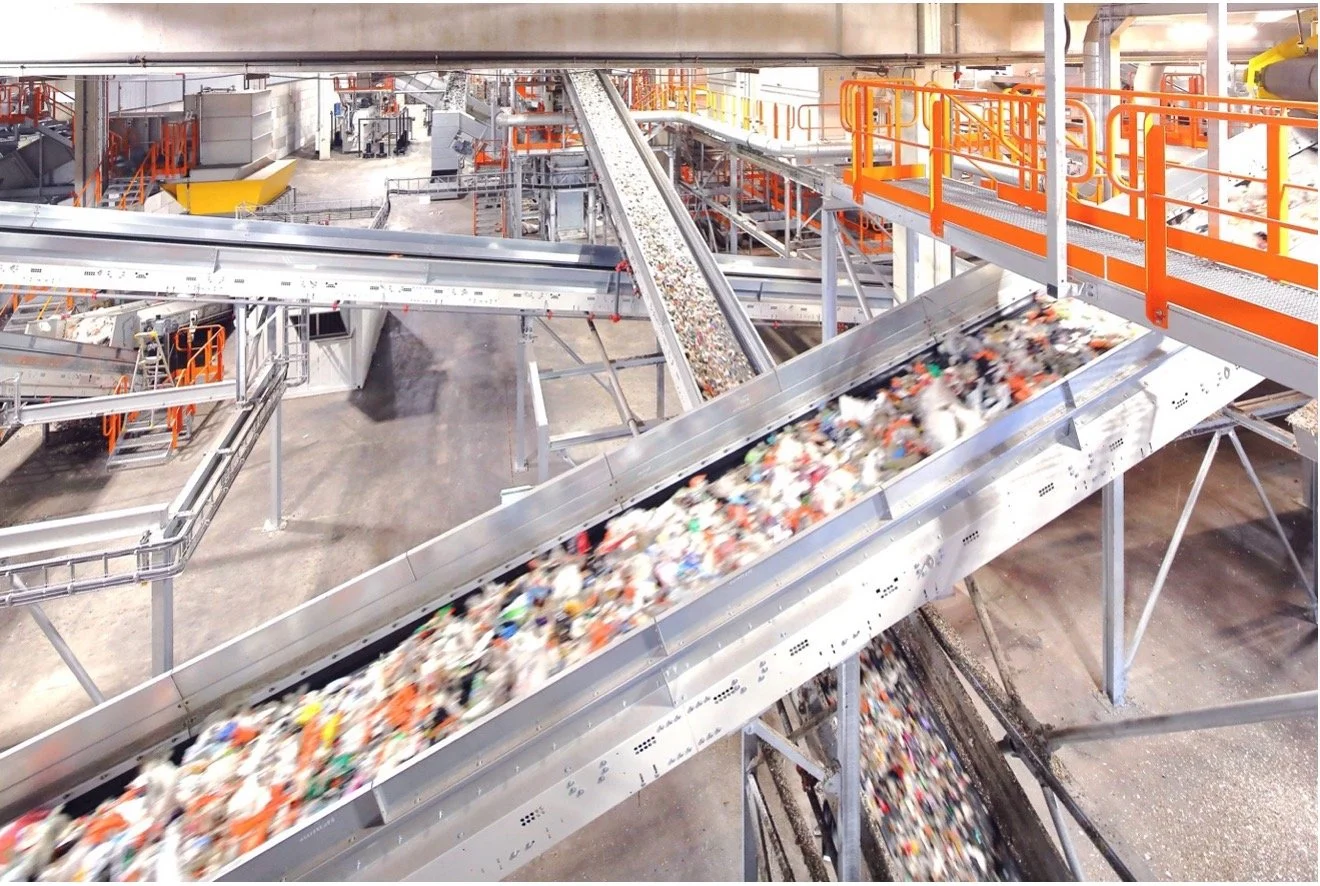
Advanced resource recovery at Site Zero, Sweden
Advanced resource recovery is one part of this opportunity. It turns discarded materials into valuable industrial inputs, creating new opportunities for manufacturers, suppliers and researchers. As businesses develop new products and technologies around recovered resources, these relationships become industrial ecosystems that attract investment, support innovation and strengthen regional competitiveness.
International examples show how the circular economy can develop at industrial scale. Sweden's Site Zero uses advanced sorting technology to recover plastics for manufacturing, while Brightlands in the Netherlands connects research, entrepreneurship and investment around advanced materials, sustainable chemistry and circular manufacturing.
Similar approaches are emerging in Australia. The Gold Coast is using an advanced resource recovery centre to anchor a broader industrial precinct, while Bega Circular Valley is connecting businesses, researchers and government to improve resource productivity across established regional industries. Elsewhere, councils and industry are exploring how collaboration can create the scale needed for advanced resource recovery and downstream manufacturing.
The circular economy create more economic value when individual activities connect. Resource recovery facilities can create streams of secondary materials that manufacturers turn into higher-value products, while researchers develop new applications and suppliers and service businesses grow around emerging industries. As these capabilities develop, they can attract further investment and support new economic activity.
For economic development practitioners, this is familiar territory. Economic development has long been concerned with how industries emerge, how businesses cluster, how innovation reaches markets and how places build competitive advantage. The circular economy presents many of the same economic development challenges: building markets, attracting investment, supporting innovation and creating the conditions for industries to grow.
Realising these opportunities requires leadership. New industries rarely emerge fully formed. They develop because leaders recognise emerging opportunities, bring organisations together and invest in capabilities that mature over time, often before their economic value is clear. The circular economy requires the same willingness to think beyond individual projects and build the conditions for future economic activity.
For cities and regions, pursuing this opportunity starts with understanding their existing assets and capabilities. Where do significant resource flows intersect with industrial strengths? Which recovered resources could become inputs for local manufacturers? Where could collaboration create sufficient scale? What research, skills, infrastructure and investment would allow new economic activity to develop?
These are economic development questions.
Econovation's new Insight Paper, Circular Economy as Economic Development: Building Regional Productive Capacity Through Resource Recovery, explores them through emerging examples in Australia and overseas.